
[trp_language language=”en_US”]Case Study[/trp_language]
[trp_language language=”ar”]دراسة حالة[/trp_language]
Dexcom
Find out how MLC helped Dexcom reach new markets and meet regulatory requirements with ease.
Copywriting
Translation Memory
Glossary Building
Medical Translation
Client Overview
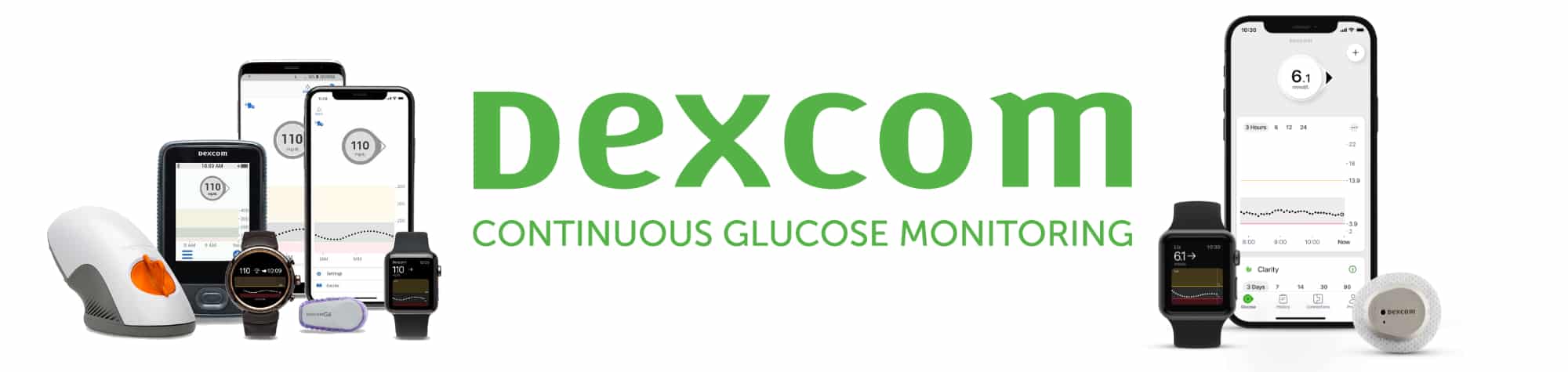
For the last 20 years Dexcom has been innovating and developing simpler and better ways for people with type 1 diabetes to measure, track and manage their diabetes. They do this through the manufacturing and distribution of their glucose monitoring systems for diabetes management.
Dexcom to date has eliminated the need for over 11 billion fingersticks and have successfully launched the world’s first real-time, integrated CGM system.
Learn how their partnership with My Language Connection, contributed to their international expansion into 52 countries, as well as supporting in getting their first EU patient into clinical trials, far faster than standard industry timelines.
MLC helped us to completely streamline our internal processes, speeding up our communications and increasing efficiency, allowing us to get our first human patient to trials, in Europe, a lot faster than we had planned through their expedited translation service.
Requirements & Challenges
As a pioneer in Real-Time Continuous Glucose Management (CGM), Dexcom’s goal is to simplify and improve diabetes management for every possible person with diabetes. The Dexcom G6 Continuous Glucose Monitoring System sends real-time glucose readings to users smartphones or watch, meaning that with a quick glance user can see their glucose levels – all without finger-sticks or scanning.
Dexcom asked MLC to help deploy marketing and user manual documentation for a variety of territories in a bid to expedite their entry-to-market timelines. Their Diabetes technology is now available in 52 countries worldwide.
Our Approach & Solution
My Language Connection provided translation services and high-level proofreading. MLC supplied native language subject matter experts which increased the speed and accuracy in delivering translated documentation. The translated documents were marketing materials for medical devices which helped spread awareness of Dexcom’s products across Europe, the Middle East and Africa.
The services My Language Connection provided supported Dexcom through their growth, and we continue to work with Dexcom on an ongoing basis, translating technical medical documentation, marketing materials and even social media management in multiple languages.
At MLC we are experts in providing companies within the healthcare & medical industry with expert language services. Some of our expertise include biotech translations, pharmaceutical translation, medical device translations as well as providing a wide range of medical translation services. Our partnership approach and commitment to quality mean we can help our clients improve outcomes and achieve their strategic goals.
Our On-Going Support
We are proud to have supported Dexcom for over 7 years and counting, by translating their content across the product life cycle – from study documents to gather clinical data, through product information and labelling for product registration, to promotional materials for brand launch and ongoing marketing campaigns and expansion.
We have contributed to the success of their product launches relating to G5, G6, G7, Dexcom One and Dexcom One +. Furthermore, with Dexcom’s feedback we developed the MLC Translation Management System. Our technology offers Dexcom a bespoke virtual Project Management workspace for their team to track their budgets and projects in real time; for In Country Reviewers to make changes to projects that are automatically logged into their glossaries; and ultimately get their medical devices to market 50% + faster.
Learn more from Dexcom and their experience with the MLC TMS below.
Machine Translation Technology – It’s just not that simple
A Changing World - but should it be? We live in a world where, in the modern day, it makes so much sense for many companies to use machines rather than human workers for day-to-day tasks. This can range from large scale manufacturing to ordering screens in fast food restaurants. The objective for businesses seems clear – the use of machines and computer software can speed up the process while cutting the cost of employing large numbers of...

Patient Consent Form Translation
Why is translating patient consent forms in a simple language so important? Sometimes as the nature of a procedure is often very technical, it is important that the patient fully understands simply what the procedure involves so as they are fully aware of how the procedure will work, what is expected of them doing it, what the potential consequences might be - if it is a new drug they are trialling or a vaccine, is there potential that the...
Is it time to look at rebranding your business post lockdown?
Grab a coffee and have a read at how we helped our logistics client Egetra do just that: Egetra’s partnership with MLC After a long journey within the logistics and solutions sector and with more than 120 years of experience, Egetra have begun to embark on the journey of a rebranding exercise that represents their values and ability to adapt to the modern times that we currently find ourselves in. Like many other business, Egetra, are now...
![The EU Medical Device Regulation [EU MDR]](https://www.mylanguageconnection.com/wp-content/uploads/2020/01/The-EU-Medical-Device-Regulation-350x250.jpg "Dexcom 5")
The EU Medical Device Regulation [EU MDR]
The EU Medical Device Regulation (EU MDR), which took effect in 2017, will become mandatory in all EU member states starting May 26, 2020. This has a raft of implications for pharmaceutical and medical device companies in the UK & EU. Article outline: What is the regulation? Who does it affect? What does it mean for companies? What actions do you need to take? The ever-increasing pace of innovation and the blurring of traditional boundaries...
ThinkBDW: the case study
ThinkBDW offer a 360-degree property marketing service for their clients and they approached us, after being recommended to us by another of our satisfied valued clients, to provide translations for one of their clients as they expand their operations into Asia. Translating their marketing materials allowed ThinkBDW to extend the value of their existing marketing copy by redeploying it to a new market while our High-Level Proofreading service...

Interpretation: What are you talking about?
Not all interpretation and translation is delivered in the same way and there is a distinct separation with what each of these types of linguists can deliver. Interpreters are linguists who deal in the spoken word while translators handle written forms of communication (although an ‘interpretation’ can, unhelpfully, also be a more liberal written translation style). The discipline can be further sub-divided by the kind of interpreting...